Data Analyst Resume Examples & Guide
 Ayush Panthri | Published: | Updated: | Reviewed By
  Kunal Saxena
Data Analytics is one of the fastest-growing career fields today, and companies across industries are actively hiring Data Analysts to help them make better business decisions using data. However, getting interview calls is becoming more competitive. Many candidates struggle with questions like: ”What should I include in my Data Analyst resume?”, ”How do I highlight SQL, Python, Power BI, or Tableau skills?”, ”How can I showcase projects if I have little or no experience?”, ”What ATS keywords should I use?”, ”How can I make my resume stand out?”
If you have also similar questions, you’re not alone. A strong Data Analyst resume should do more than list your skills and responsibilities. It should show recruiters how you analyze data, solve problems, create reports and dashboards, and deliver meaningful business insights.
In this guide, you’ll review practical resume examples, how to structure a Data Analytics resume, showcase your experience and achievements effectively and optimize your resume for ATS systems that can help you secure more interviews.
By end of this you”ll know
Data Analyst Resume Examples
1. Fresher Data Analyst Resume Example
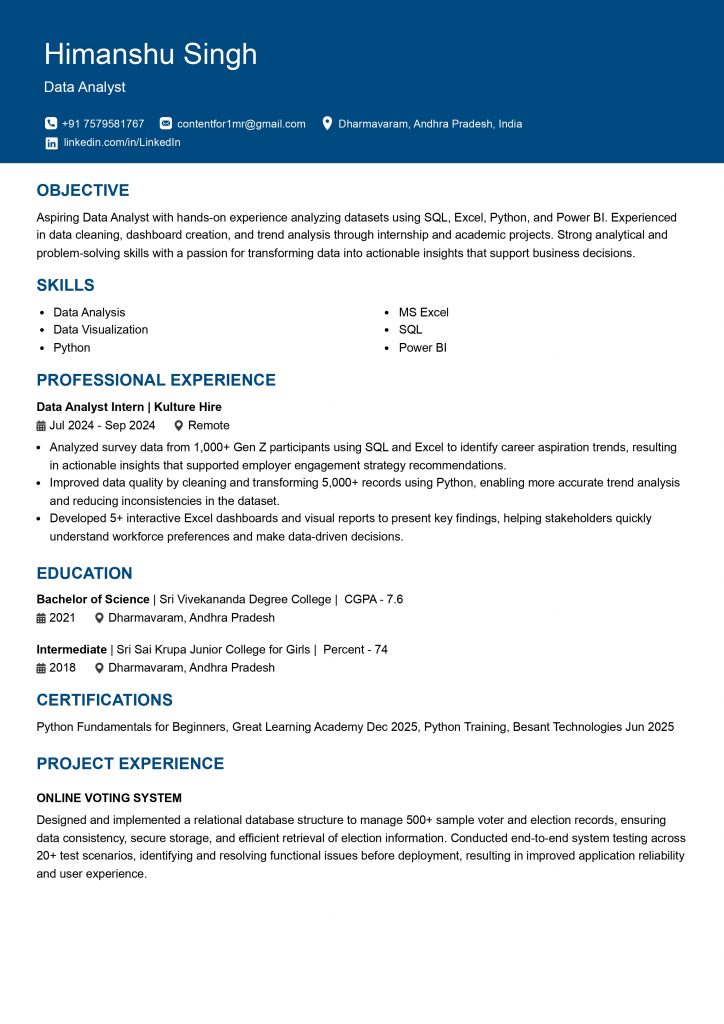
2. Mid-Level Data Analyst Resume Example
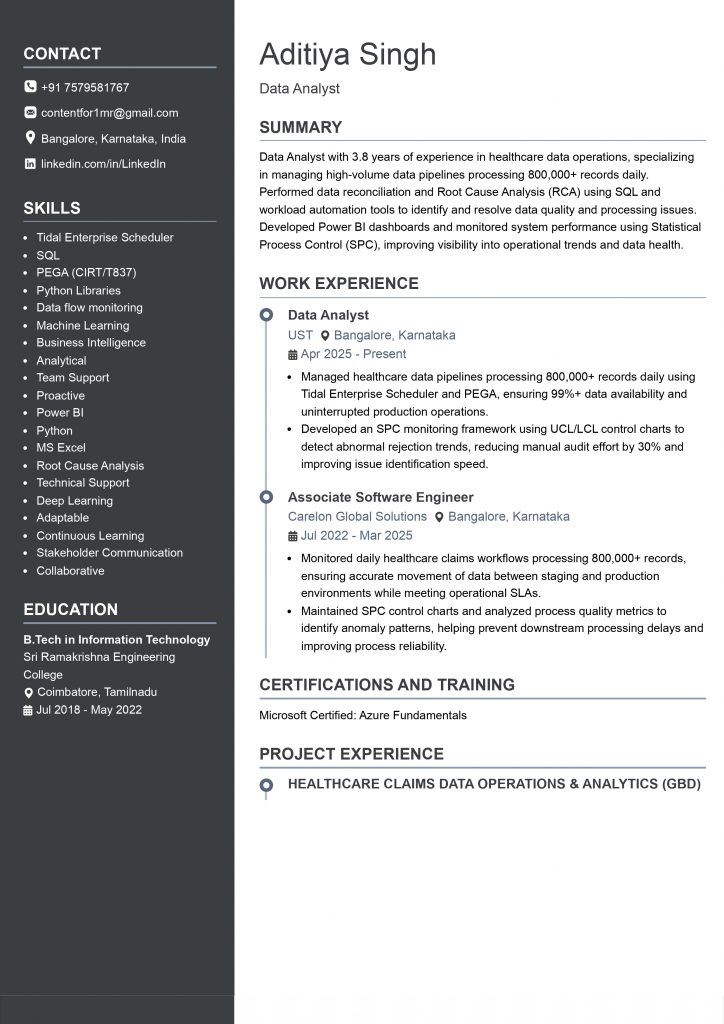
3. Senior Data Analyst Resume Example
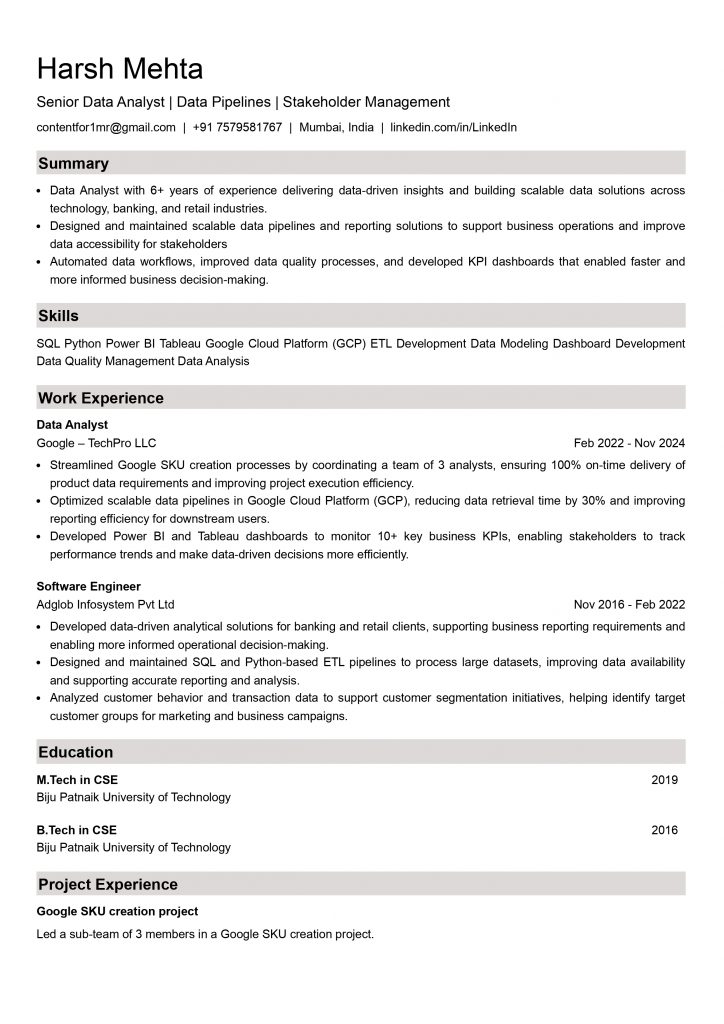
What Does a Data Analyst Do?
A Data Analyst helps organizations make better business decisions by collecting, cleaning, and analyzing data. They identify trends, patterns, and insights from data and present their findings through reports and dashboards. Their work helps businesses improve performance, solve problems, reduce costs, and discover new growth opportunities.
Main Responsibilities of a Data Analyst are:
| • Collecting data from multiple sources • Cleaning and validating datasets • Writing SQL queries to retrieve and analyze data • Creating dashboards and reports using Power BI or Tableau • Performing trend and performance analysis • Identifying business opportunities through data insights • Supporting stakeholders with data-driven recommendations • Monitoring KPIs and business metrics • Automating reporting processes • Presenting findings to management teams |
For example: A retail company may use a Data Analyst to identify which products generate the highest profit margins, while a healthcare company may use analytics to improve patient outcomes and operational efficiency.
Choosing the Best Resume Format
Choosing the right resume format is important when creating a Data Analyst resume. Even if you have strong technical skills, a poorly organized resume can make it harder for recruiters to notice your qualifications. Recruiters and ATS systems prefer resumes that are easy to scan and organized logically.
Which Resume Format Is Best for Data Analysts?
The Reverse Chronological Resume Format is the best option for both fresher and experienced data analyst professionals. It allows recruiters to quickly understand your relevant technical experience, your current role, career progression and your recent achievements.
Before writing your resume, make sure you’re using the right format. Read our detailed Resume Format with Examples Guide to learn which resume format perform best with recruiters and Applicant Tracking Systems (ATS).
Should Your Resume Be One Page or Two Pages?
For fresher and entry-level Data Analysts a one-page resume is usually sufficient because freshers typically have limited experience, academic projects and internships certifications. So recruiters prefer concise resumes that highlight relevant information clearly.
For Experienced Data Analysts a two-page resume is acceptable because they have multiple years of experience, several projects, certifications, leadership responsibilities and significant achievements. Focus on quality rather than length.
Which Resume Templates works Best for ATS?
ATS systems perform best with simple resume templates like single-column format, clear section headings, standard fonts, bullet points and consistent formatting. You can avoid tables, icons, graphics, text boxes, multi-column layouts and complex designs.
Found these resume examples helpful? Use our ATS-friendly resume templates to build a professional resume and customize it for your experience level, skills, and target role.
How to Write a Data Analyst Resume
A Data Analyst resume should demonstrate your ability to collect, analyze, visualize, and interpret data to support business decisions. Recruiters are not just looking for technical skills they want evidence that you can use data to solve problems and deliver measurable results.
A strong Data Analyst resume typically includes:
Start With Contact Information
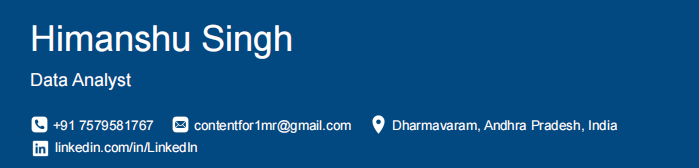
The top section of your resume should contain your professional contact information. Recruiters use this section to contact you and review your online presence.
Example: You can include.
| Full Name | Rahul Sharma |
| Phone Number | +917579581767 |
| Professional Email Address | rahul.sharma@email.com |
| LinkedIn Profile | linkedin.com/in/rahulsharma |
| GitHub Profile | github.com/rahulsharma |
| Portfolio Website | portfolio.com/rahulsharma |
What Contact Information Should I Included? Include only professional information that helps recruiters contact you or evaluate your work. You can avoid your date of birth, marital status, gender, religion and your full address these details are unnecessary for modern resumes.
Why Does a Portfolio Matter for Data Analysts? A portfolio demonstrates your practical skills a strong portfolio may include your Power BI Dashboards, Tableau Dashboards, SQL Projects, Python Projects, Kaggle Notebooks and Data Visualization Reports. It can help compensate for limited professional experience.
Write a Strong Resume Summary
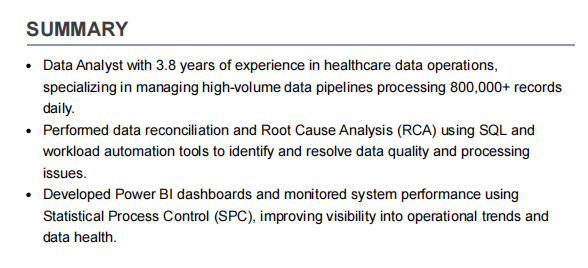
A resume summary helps recruiters quickly understand your profile and encourages them to continue reading your resume. Since it appears at the top of the resume, it is a great opportunity to make a strong first impression. Your resume summary quickly explain Who you are?, your experience level, your technical expertise, your key achievements and your value to employers.
Example:
As a fresher, you should write a career objective instead of a resume summary because you have limited or no professional experience. A well-written career objective helps recruiters quickly understand your skills, career goals, and what you can contribute as a Data Analyst.
If you want to write a strong career objective? Read our blog article to learn a simple formula and explore 75+ career objective examples for different job roles to create a more effective resume.
Example:

Showcase Your Work Experience Effectively
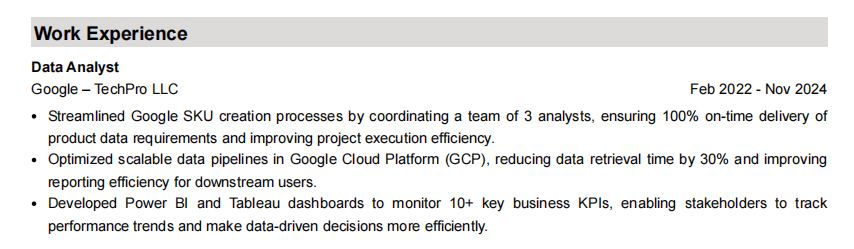
The Work Experience section helps recruiters understand how you’ve used your analytical skills to solve problems and deliver results. Instead of listing only your responsibilities, focus on your achievements and the impact of your work.
A simple way to write stronger bullet points is by using the CAR Formula:
- Challenge: What problem or goal existed?
- Action: What did you do?
- Result: What was the outcome?
Quantify Your Impact
Using metrics is one of the best ways to strengthen your resume. Numbers make your achievements more credible and help recruiters quickly understand the value of your work.
In the table below, you can see examples of weak resume bullet points and their improved versions using the CAR (Challenge, Action, Result) formula with measurable metrics.
| Weak | Strong |
|---|---|
| Wrote SQL queries for data analysis. | Analyzed 500,000+ customer records using SQL to identify purchasing trends, resulting in recommendations that increased campaign conversion rates by 15%. |
| Created Tableau dashboards. | Developed Tableau dashboards to track 20+ business KPIs, reducing report preparation time by 60% and improving stakeholder visibility into performance metrics. |
| Prepared weekly reports. | Automated weekly business reporting using Power BI and SQL, reducing manual effort by 10 hours per week and improving reporting consistency. |
Example:
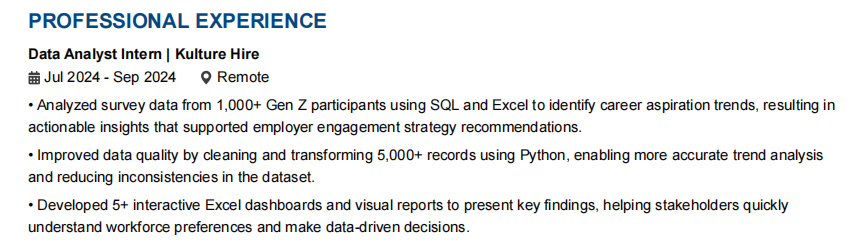
If you are a fresher with no work experience, include your internship experience in the place of Work Experience section. It helps recruiters evaluate your practical skills and relevant industry exposure.
Example:
Want to write stronger work experience bullet points? Watch the video below to learn how to use the CAR formula and metrics to showcase your impact and make your resume more compelling.
Highlight Your Technical Skills
Technical skills are an important part of a Data Analyst resume. Recruiters and ATS systems often review this section to quickly determine whether you have the skills required for the role.
Which Technical Skills Should Data Analysts Include?
The answer depends on your experience level and target role. However, most employers commonly look for the following skills given below.
| Querying and Database Skills | Programming Languages | Business Intelligence Tools | Spreadsheet Skills | Cloud Platforms | Data Analytics Skills |
|---|---|---|---|---|---|
| • SQL • MySQL • PostgreSQL • SQL Server • Oracle • Database •Management | • Python • R • Pandas • NumPy • Scikit-Learn | • Power BI • Tableau • Looker • Qlik Sense | • Microsoft •Excel • Google •Sheets • Pivot Tables •Power Query • VLOOKUP • XLOOKUP | •Google Cloud Platform (GCP) • Microsoft Azure • Amazon Web Services (AWS) • BigQuery • Snowflake | • Data Cleaning • Data Visualization • ETL Processes • Data Modeling • Statistical Analysis • Exploratory Data Analysis • KPI Reporting • Forecasting |
Pro Tip: Don’t just list your technical skills in the Skills section. Show where you’ve used them in your Work Experience, Projects, and Certifications. Explain how you used those skills to solve problems or complete projects. This helps recruiters and ATS systems see that you have practical experience, not just theoretical knowledge.
Should Technical Skills and Soft Skills Be Listed Together?
The answer is yes. You can include both technical and soft skills within the same Skills section, but it’s best to organize them separately under clear categories.
Soft Skills
- Communication
- Problem Solving
- Critical Thinking
- Stakeholder Management
- Collaboration
Example:

Watch the video below to learn how to structure your Skills section, showcase your technical and soft skills, and make your resume more attractive to recruiters and ATS systems.
Write the Education Section
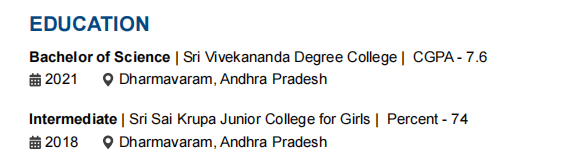
The Education section is especially important for freshers and entry-level Data Analysts because recruiters often evaluate academic qualifications, coursework, and projects when professional experience is limited. Even experienced professionals should include their educational background, although it generally receives less emphasis than work experience.
Should I Include My CGPA on My Resume? If your CGPA is strong (typically above 7.5/10 or equivalent), including it can strengthen your profile.
Should I Include Relevant Coursework? Relevant coursework can help demonstrate foundational knowledge, especially for freshers.
What Should I Included in the Education Section?
Your education section should include:
- Degree Name
- College or University Name
- Graduation Year
- CGPA or Percentage (Optional)
- Relevant Coursework (Optional)
Example:
Showcase Your Projects
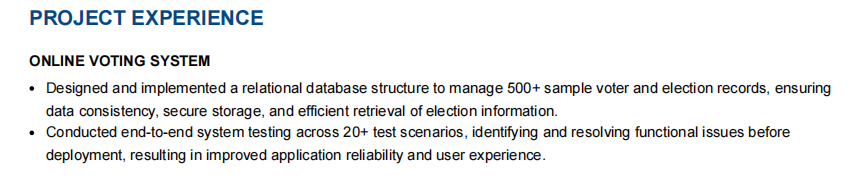
Projects are one of the most important sections for Data Analysts, especially for freshers and career changers. Recruiters understand that not every candidate has years of professional experience. Projects provide evidence that you can apply technical skills to solve real-world problems.
Use our 1MillionResume Project Writing Formula to structure your project descriptions:
- What the project is about
- What you contributed to the project
- Which technologies and skills you used
This approach helps make your Project section stronger, more professional, and easier for recruiters to understand.
Example:
Include Certifications
Certifications help validate your technical knowledge and commitment to learning they can strengthen your resume, especially when you’re entering the field or transitioning into analytics.
Are Certifications Important for Data Analysts? Certifications can help to show your continuous learning, demonstrate technical expertise, improve ATS keyword relevance and strengthen your credibility.
Which Certifications Are Most Valuable?
| Data Analytics Certifications | Programming Certifications | Cloud Certifications |
|---|---|---|
| Google Data Analytics Professional Certificate Microsoft Power BI Data Analyst Associate IBM Data Analyst Professional Certificate Tableau Desktop Specialist | Python Programming SQL for Data Analysis Data Structures and Algorithms | AWS Cloud Practitioner Google Cloud Digital Leader Microsoft Azure Fundamentals |
Good Certifications for Freshers
| Certification | Popular Platform |
|---|---|
| Python Programming SQL for Data Analysis Web Development Fundamentals Google Data Analytics Power BI Fundamentals | Coursera Udemy freeCodeCamp Microsoft Learn |
Example:

Achievements
The Achievements section helps recruiters identify accomplishments that demonstrate your performance, dedication, and skills, including academic achievements, project awards, certifications, and competition results.
Examples:
- Academic Awards
- Scholarship Recognition
- Hackathon Participation
- Analytics Competition Rankings
Coding Profiles
Recruiters often appreciate candidates who actively practice analytical and programming skills.
Consider including: GitHub, Kaggle, LeetCode, HackerRank
Optimize Your Resume for ATS (Applicant Tracking Systems)
Most companies use ATS to screen resumes. To improve your chances of getting shortlisted, use relevant keywords and a simple, ATS-friendly resume format.
What Is a Good ATS Score? There is no fixed ATS score that guarantees success. Instead, focus on creating a resume that matches 75% or more of the skills and requirements listed in the job description.
Want to learn more? Read our detailed guide on What Is a Good ATS Score? You’ll also find practical tips to improve your resume and increase your chances of getting shortlisted.
Resume Keywords That ATS Scans For
These are some of the most common ATS keywords of Data Analyst role we’ve identified across multiple resumes. Choose the keywords that best match your target job role and experience.
| SQL & Database Keywords | Python & Programming Keywords | Data Visualization Keywords | Excel Keywords | Cloud & Big Data Keywords | Analytics & Business Keywords |
|---|---|---|---|---|---|
| • SQL • MySQL • PostgreSQL • SQL Server • Oracle • Database Management • Data Extraction • Data Querying • Data Validation • Stored Procedures | • Python • Pandas • NumPy • Matplotlib • Seaborn • Scikit-learn • Jupyter •Notebook • Data Cleaning Automation • Data Processing | • Power BI • Tableau • Looker Studio • Dashboard •Development KPI Reporting • Interactive Dashboards • Data Visualization • Business Reporting | • Microsoft •Excel • Pivot Tables • Power Query • Power Pivot • VLOOKUP • XLOOKUP • INDEX-MATCH • Conditional Formatting • Advanced Excel | • Google Cloud •Platform (GCP) • Microsoft Azure • AWS • BigQuery • Snowflake • Hadoop • Spark • Data •Warehouse • Cloud Analytics | • Business Intelligence • Data Analysis • Statistical Analysis • Predictive Analytics • Trend Analysis • Customer Segmentation Forecasting • Data Modeling • KPI Analysis • Business Insights |
The best way to identify ATS keywords is by carefully reviewing the job description. Look for skills, technologies, programming languages, tools, and responsibilities that appear multiple times, as these are the keywords recruiters and ATS systems are most likely to look for.
Want to tailor your resume more effectively? Explore our How to Match Your Resume with a Job Description guide for practical tips and examples.
Key Takeaways
- Proofread your resume before applying.
- Choose a clean, ATS-friendly resume format.
- Write a strong Resume Summary or Career Objective.
- Organize your Technical Skills into categories.
- Use the CAR (Challenge, Action, Result) formula for experience and project descriptions.
- Quantify achievements with metrics whenever possible.
- Include relevant projects, certifications, and coding profiles.
- Optimize your resume using keywords from the job description.
Author – Ayush Panthri
Connect on LinkedIn

Reviewer – Kunal Saxena
Kunal is a seasoned Technical Resume Writer with over 13 years of experience working with startups, mid-sized firms, and top global companies like Goldman Sachs and EY. He brings deep domain expertise across tech, education, insurance, e-commerce, and investment banking.
He has helped hundreds of professionals from top firms—including Apple, Meta, Google, Adobe, and Amazon — land interviews and advance their careers globally. His approach blends real-world hiring insight with high-impact resume strategy.
Kunal is an active member of Career Thought Leaders and the Resume Writing Academy, staying current with global resume trends and recruiter expectations.
Connect on LinkedIn
Related Posts
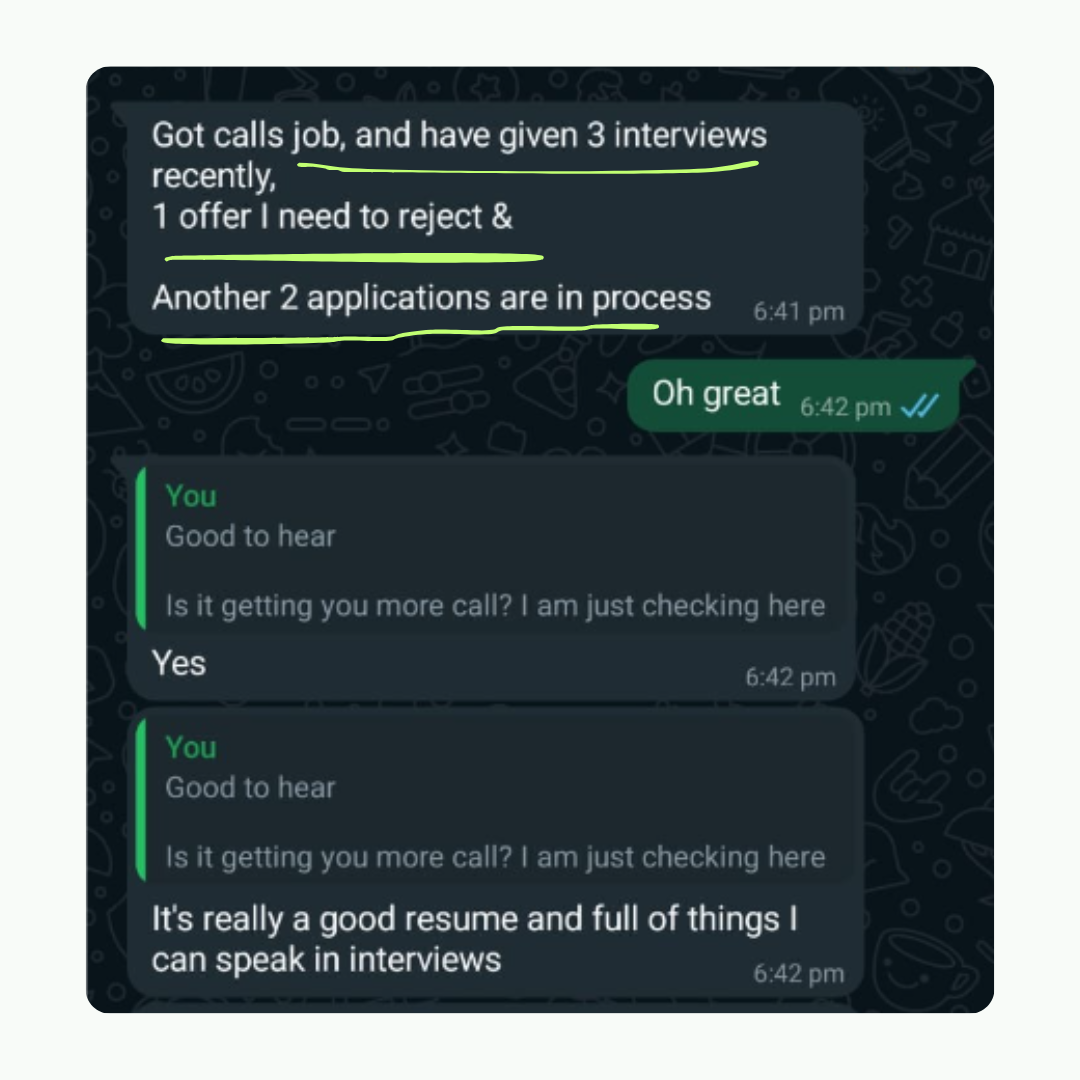
Amit got 2 Offers with our resume builder

My experience was truly outstanding, I got 3-5 interview calls and 2 job offers. The resume wasn't just focused on my current job - it captured my consulting, technical and leadership skills as well. Plus this was much more affordable
Data Engineer - Deloitte