Resume References Section Guide
 Ayush Panthri · 12 min read

Resume references are people who can share information about your skills, work ethic, and suitability for a job. They may include former managers, colleagues, professors, or internship supervisors who know you professionally or academically.
Employers may contact your references by phone or email to verify information and learn more about your abilities. However, you do not need to include references on every resume. In most cases, it is better to prepare a separate reference list and share it when an employer requests one.
In this guide, you will learn what resume references are, when to provide them, whom to choose, how to format a reference list, and how to ask someone to be your reference.
By end of this you”ll know
Should You Include References on a Resume?
In most cases, you do not need to include references directly on your resume unless the employer asks for them. Your resume has limited space, so use it to highlight your skills, work experience, achievements, projects, and qualifications. Most employers ask for references later in the hiring process, usually after reviewing your resume or interviewing you.
It is better to prepare a separate reference list and share it when needed. This keeps your resume focused and allows you to provide the right references for each job application.
When Should You Include References on a Resume?
You may need to provide references on the resume in the following given below situations.
1. When the Job Description Requests References – Read the job description carefully before applying. If the employer asks you to submit references with your resume, follow the instructions. You may need to attach a separate reference list or enter the details in the application form.
2. When an Online Application Asks for Reference Details – Some online job applications ask for your references’ names, job titles, contact details, and professional relationships. Keep this information ready so you can complete the application easily and accurately.
3. When Applying for Academic or Research Positions – Some teaching, academic, and research positions require references during the application process. For example, a university may ask for references who can explain your academic background, research skills, or teaching abilities. Always follow the application instructions.
4. When the Job Requires Professional Verification – Some employers check references to learn more about your previous work experience, skills, and professional behaviour. If the employer requests references during the application process, provide the details in the required format.
Which References Should You Include on Your Resume?
The best references are people who know your work and can speak honestly about your skills, performance, and professional behavior. So you can choose those people who can explain your strengths and how they relate to the job you are applying for. Here are some people given below you can choose as references based on your experience and the type of job you want.
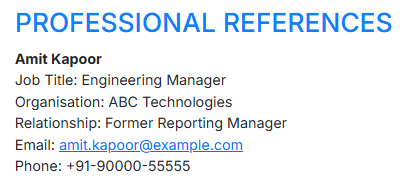
1. Current or Former Managers – Current or former managers can be strong professional references because they may have directly observed your work and performance. They can talk about your responsibilities, achievements, reliability, communication skills, and ability to work with a team. For example, if you are applying for a project management role, a former manager can explain how you handled deadlines, coordinated with team members, and managed project tasks.
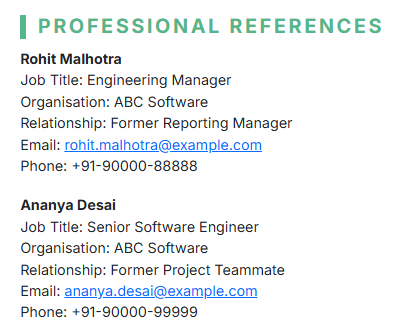
2. Former Supervisors or Team Leaders – Former supervisors and team leaders can also be good references, especially if they have directly reviewed your work. They can explain your contribution to projects, technical skills, ability to follow processes, and overall performance. For example, a former engineering team leader can discuss your contributions to software development, code reviews, testing, or production support.
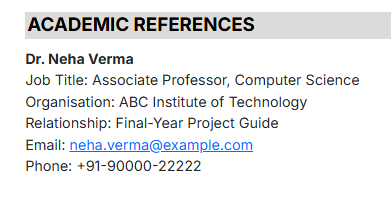
3. Professors or Academic Mentors – Professors and academic mentors are useful references for students and freshers who have limited work experience. They can discuss your academic performance, subject knowledge, project work, research skills, and willingness to learn. For example, if a professor supervised your final-year project, they can explain your contribution, technical knowledge, and approach to solving problems.
4. Internship Supervisors – If you have completed an internship but do not have full-time work experience, your internship supervisor can be a valuable reference. They can explain how you performed during the internship, learned new skills, completed assignments, and worked with others. For example, if you completed a data analytics internship, your supervisor can discuss how you prepared reports, analyzed data, or supported business projects.
5. Clients or Professional Partners – Clients and professional partners can be suitable references if they have worked closely with you and understand the quality of your work. They can discuss your communication, problem-solving skills, reliability, and ability to deliver results.
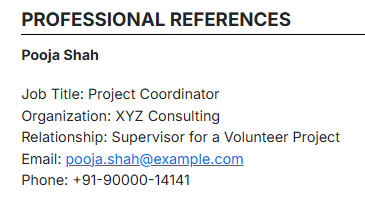
6. Volunteer Coordinators or Organization Leaders – If you have limited work experience, a volunteer coordinator or organization leader can be a good reference, especially if your volunteer work is relevant to the job. They can discuss your teamwork, communication, leadership, and ability to take responsibility. For example, a coordinator who supervised you during a community program can explain how you organized activities, worked with others, or managed assigned tasks.
How to List References on a Resume
You can follow given below steps to create a clear and simple reference list. Keep the document professional, and easy to read.
Step 1: Add Your Contact Information – Start the document with your name and contact information. Use a header similar to the one on your resume to keep both documents consistent. You can include your phone number, professional email address, city, and LinkedIn profile if relevant. Avoid adding unnecessary personal information.
Step 2: Add a Clear Heading – Add a simple heading at the top of the document so the employer knows what it contains. Choose a heading that matches the purpose of your reference list. You can use headings such as: Professional References, References and Academic References.
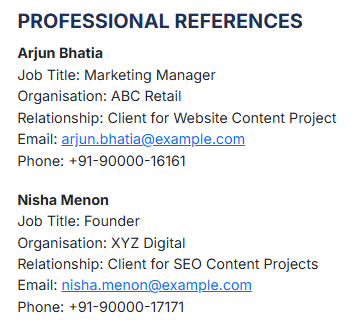
Step 3: Include the Important Details for Each Reference – For each reference, provide the information the employer needs to contact them and understand their professional background. Make sure all details are correct and up to date. Confirm the information with each person before sharing your reference list. Include the following details where relevant: Full Name, Job Title, Organization, Relationship, Email Address, Phone Number and Additional Details.
Step 4: Explain Your Relationship with Each Reference – Clearly explain how each person knows you. This helps the employer understand why you have chosen them as a reference. If a reference has changed jobs since you worked together, mention the company or role where you worked with them. For example: Relationship: Former Reporting Manager at ABC Technologies, where we worked together from 2022 to 2024. This helps the employer understand your professional connection with the person.
Step 5: Arrange Your References in the Right Order – List your most relevant references first. Choose the order based on the job you are applying for and the people who can best explain your skills and experience. For example, if you are applying for a software engineering position, a former engineering manager or team leader may be more relevant than a professor who taught you an unrelated subject.
Sample Reference List Format
You can copy & paste and use the following format when an employer asks you to provide references.
| YOUR NAME Email: yourname@email.com Phone: +91-XXXXXXXXXX LinkedIn: linkedin.com/in/yourprofile PROFESSIONAL REFERENCES Reference 1: [Full Name] Job Title: [Current Job Title] Organization: [Company Name] Relationship: Former Reporting Manager at [Previous Company] Email: [Professional Email Address] Phone: [Preferred Contact Number] Reference 2: [Full Name] Job Title: [Current Job Title] Organization: [Company Name] Relationship: Former Team Lead at [Previous Company] Email: [Professional Email Address] Phone: [Preferred Contact Number] Reference 3: [Full Name] Job Title: [Current Job Title] Organization: [Company or Institution Name] Relationship: [Professor, Internship Supervisor, or Other Relevant Connection] Email: [Professional Email Address] Phone: [Preferred Contact Number] |
How to Ask Someone to Be a Reference
You can always ask for permission before sharing someone’s name and contact details with a potential employer. Whether you want to ask a former manager, colleague, professor, or client, make a polite request and give them the opportunity to decide if they are comfortable recommending you.
1. Choose the Right Person – Choose someone who knows your work, skills, and strengths. They should be able to explain how you performed and share specific examples of your abilities. For example, if you are applying for a data analyst position, a manager or colleague who has worked with you on data analysis projects may be a better choice than someone who knows you only personally.
2. Contact Them Professionally – Reach out through email, LinkedIn, or another appropriate communication channel. Politely explain that you are applying for a job and ask if they would be comfortable serving as your reference. If you have not contacted them in a long time, start by reminding them how you know each other and briefly explain your current career goals.
3. Explain the Job You Are Applying – Share some details about the job so the person understands the opportunity and knows which of your skills may be relevant. You can include:
- The job title and company name.
- The main responsibilities of the role.
- The skills and experience the employer is looking for.
- How your previous work with them relates to the position.
This information helps your reference prepare if the employer contacts them.
4. Share Your Updated Resume – Send your latest resume and, if possible, a copy of the job description. These documents can help the person remember your responsibilities, projects, and achievements. If you are applying for a role in a different field, explain your career goals so they understand why you are interested in the position.
5. Give Them Time to Respond – Give the person enough time to consider your request instead of expecting an immediate response. If they are unable or unwilling to serve as your reference, thank them politely and contact someone else. Choose a person who is comfortable recommending you and can speak positively about your work.
6. Keep Them Updated – If the employer may contact your reference, let them know when you receive that information. Also, update them if your job search takes longer than expected or your career plans change. Once the hiring process is complete, thank them for their time and support. If appropriate, share the outcome of your application. Maintaining a professional relationship with your references can also help you build a strong network for future career opportunities.
What to Avoid When Listing References on a Resume
Avoid these given below common mistakes to keep your reference list professional and make a good impression on potential employers.
1. Adding References When They Are Not Required
Do not add references to your resume unless the employer specifically asks for them. Instead, prepare a separate reference list and share it when requested. This allows you to use your resume space for more important details, such as your skills, experience, and achievements.
2. Listing Someone Without Their Permission
Always ask for permission before sharing someone’s name, phone number, or email address as a reference. The person may not be available or may prefer a different way of being contacted. Asking in advance also gives them time to prepare for a possible call or email from the employer.
3. Choosing Someone Who Does Not Know Your Work
Choosing a senior professional does not always make your reference list stronger. Someone who has worked closely with you and understands your skills, work habits, and achievements can provide better feedback than someone with a high position who barely knows you.
4. Using Friends or Family as Professional References
Avoid listing friends or family members as professional references unless the employer specifically asks for personal or character references. Instead, choose people such as managers, supervisors, professors, or clients who can speak about your skills, work experience, and professional abilities.
5. Sharing Incorrect or Outdated Contact Information
Incorrect phone numbers, inactive email addresses, or outdated job titles can make it difficult for employers to contact your references. Before submitting your reference list, check that all contact details are correct. If a reference has changed jobs, update their current job title and organization while clearly explaining your professional relationship with them.
Resume References Examples
1. Resume References for Freshers
2. Resume References for Experienced Professionals
3. Resume References for a Software Engineer
4. Resume References for a Career Changer
5. Resume References for Freelancers
FAQs About Resume References
1. How many references should I list?
Prepare three to five suitable references unless the employer specifies a different number. You may need to provide only two or three for a particular application, so follow the employer’s instructions.
2. Can freshers include references on a resume?
Freshers can prepare references from professors, academic project guides, internship supervisors, or volunteer coordinators. They usually do not need to include these details directly on the resume unless the employer requests them.
3. Can I use my current manager as a reference?
Yes, if you have their permission and are comfortable with your current employer knowing about your job search. If you need to keep your search confidential, consider an appropriate former manager or another professional who can discuss your work.
4. Is “References available upon request” necessary on a resume?
No. It is generally unnecessary because employers can request references when they need them. Use that space to highlight relevant qualifications and achievements.
5. What should I do if a reference changes jobs?
Update their current job title and organisation. You can also explain how you know them, such as “Former Reporting Manager at ABC Technologies.” The relationship should remain accurate even if the person’s employment changes.
6. What should I do after an employer contacts my references?
Thank your references for their time and support. If appropriate, update them about the hiring outcome. Maintaining these professional relationships can help you throughout your career.
Author – Ayush Panthri
Connect on LinkedIn

Reviewer – Kunal Saxena
Kunal is a seasoned Technical Resume Writer with over 13 years of experience working with startups, mid-sized firms, and top global companies like Goldman Sachs and EY. He brings deep domain expertise across tech, education, insurance, e-commerce, and investment banking.
He has helped hundreds of professionals from top firms—including Apple, Meta, Google, Adobe, and Amazon — land interviews and advance their careers globally. His approach blends real-world hiring insight with high-impact resume strategy.
Kunal is an active member of Career Thought Leaders and the Resume Writing Academy, staying current with global resume trends and recruiter expectations.
Connect on LinkedIn
Amit got 2 Offers with our resume builder

My experience was truly outstanding, I got 3-5 interview calls and 2 job offers. The resume wasn't just focused on my current job - it captured my consulting, technical and leadership skills as well. Plus this was much more affordable
Data Engineer - Deloitte