Resume Headline Section Guide
 Ayush Panthri · 5 min read

A resume headline is a short statement placed near the top of your resume, usually below your name and contact information. It quickly tells recruiters who you are, your professional background, and the type of role you are targeting.
Resume headline can help recruiters understand your profile within seconds by highlighting your industry, experience, specialization, and 2-3 key skills. Since it appears near the top of the resume, it is often one of the first things employers notice. The best resume headlines are clear, specific, and relevant to the job you are applying for. They should accurately reflect your experience and skills while it is remaining short and easy to read.
In this guide, you will learn what is a resume headline ? Why it is important. How to write an effective resume headline? and Resume headline examples for different experience levels and Roles.
By end of this you”ll know
Why Is a Resume Headline Important?
A resume headline is important because it helps recruiters quickly understand your professional background, including your industry, expertise, skills, experience, and the type of role you are targeting. So headline makes your resume easier to understand and helps recruiters quickly identify whether your profile matches their requirements.
1. Helps Recruiters Understand Your Profile Quickly – A resume headline provides a brief overview of your professional identity. Instead of reading your entire resume first, recruiters can quickly see your current role, experience, 2-3 skills or area of expertise.
For example: Cloud Engineer | AWS, Terraform & Kubernetes | DevOps & Infrastructure Automation
2. Highlights Your Area of Specialization – If you have experience in multiple areas, a headline can help clarify your professional focus and career direction. The given below example gives recruiters a much clearer understanding of your expertise and target role.
For example: Product Manager | 5+ Years in B2B SaaS | Product Strategy, Roadmaps & Agile Delivery
3. Supports Relevant Resume Keywords – A headline can include important skills and keywords that are relevant to the position you are applying for. Including relevant keywords can help recruiters quickly identify your qualifications. However, only include skills and experience that genuinely reflect your background.
For example: Data Engineer | Python, SQL & AWS | ETL Pipelines & Data Engineering
4. Creates a Strong First Impression – Your headline is one of the first sections recruiters see. A clear and relevant headline can make your resume more professional and encourage recruiters to continue reading.
How to write a good Resume Headline
A resume headline is one of the first things a recruiter notices. It gives a quick summary of who you are and helps hiring managers understand your profile within a few seconds. A good headline can highlight your current role, industry, Top-tier college, Total years of experience and 2-3 key skills. It can also help your resume match relevant keywords in Applicant Tracking Systems (ATS).
One of the easiest ways to write a strong resume headline is to follow this simple formula given below.
- Current Role / Target Role | Top 2–3 Key Skills
For experienced professionals, use your current job title or specialization. For students, freshers, and recent graduates, use the role you are targeting.
You can also add additional details if they are relevant and fit naturally in a single line, such as:
- Total years of experience | Important certifications | Top-tier college or university | Industry specialization
Tip: Keep your headline short, clear, and easy to read.

Resume Headline vs. Resume Title: What’s the Difference?
Resume headlines and titles may look similar, but there is a small difference between the two we can discuss it below.
1. Resume Headline – A resume headline is a short statement that gives recruiters a quick overview of your professional profile. It can include your role, years of experience, specialization, and key skills. A headline provides more information about your background and expertise than a job title alone.
Example: Senior Data Analyst | 6+ Years of Experience | SQL, Python, Power BI & Business Intelligence
2. Resume Title – A resume title is a simple description of your professional role or the position you are targeting. It tells recruiters what your profession is but does not provide additional details about your skills or experience.
Example: Senior Data Analyst
A resume title focuses only on your role, while a resume headline gives extra information about your experience, specialization, and key strengths.
| Resume Headline | Resume Title |
|---|---|
| More descriptive | More direct |
| Can include experience and skills | Usually focuses on the role |
| Helps communicate specialization | Identifies the professional position |
| Can be tailored to the job | Usually shorter |
Resume Headline Examples
1. Resume Headline Example for Fresher
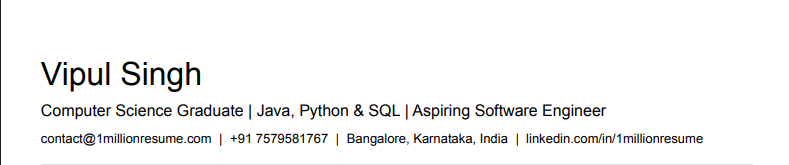
2. Resume Headline Example for Senior Software Engineer
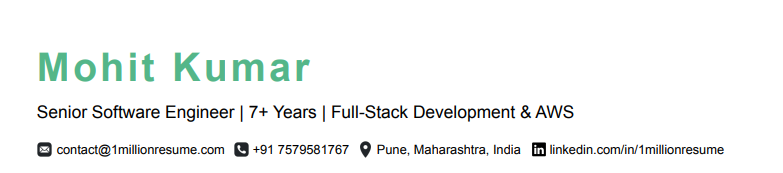
3. Resume Headline Example for Data Professional

4. Resume Headline Example for Product Manager

5. Resume Headline Example for HR Professional
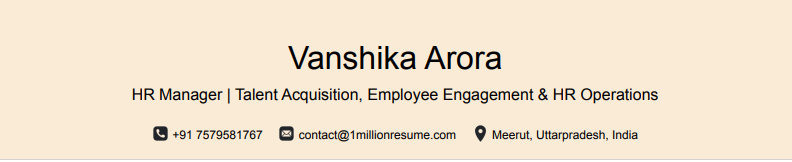
6. Resume Headline Example for Finance Professional

7. Resume Headline Example for Marketing Professional

FAQs
1. Is a Resume Headline Necessary?
No, a resume headline is optional. However, it can help recruiters quickly understand your role, specialization, or target position.
2. How Long Should a Resume Headline Be?
Keep your headline short and easy to read. In most cases, a single line highlighting your role, experience, or key skills is enough.
3. Should Freshers Use a Resume Headline?
Yes. A headline can help freshers highlight their target role and relevant skills, making their resume more informative than simply stating “Fresher.”
4. Should I Customize My Resume Headline for Every Job?
Yes, when possible. Tailoring your headline to match the target role can make your resume more relevant to recruiters and hiring managers.
5. Can I Use Keywords in My Resume Headline?
Yes. Including relevant job titles and skills can help communicate your qualifications, but only use keywords that accurately reflect your experience.
6. Can I Use AI to Write My Resume Headline?
Yes. AI can generate headline ideas, but you should always review and edit them to ensure they are accurate, relevant, and natural.
7. What Should I Avoid in a Resume Headline?
Avoid generic phrases, long sentences, unsupported claims, keyword stuffing, and unrelated career goals. Focus on clearly describing your professional profile.
8. Can a Resume Headline Improve ATS Performance?
A headline can help by including relevant role and skill keywords. However, ATS performance depends on your entire resume, not just the headline.
Author – Ayush Panthri
Connect on LinkedIn

Reviewer – Kunal Saxena
Kunal is a seasoned Technical Resume Writer with over 13 years of experience working with startups, mid-sized firms, and top global companies like Goldman Sachs and EY. He brings deep domain expertise across tech, education, insurance, e-commerce, and investment banking.
He has helped hundreds of professionals from top firms—including Apple, Meta, Google, Adobe, and Amazon — land interviews and advance their careers globally. His approach blends real-world hiring insight with high-impact resume strategy.
Kunal is an active member of Career Thought Leaders and the Resume Writing Academy, staying current with global resume trends and recruiter expectations.
Connect on LinkedIn
Amit got 2 Offers with our resume builder

My experience was truly outstanding, I got 3-5 interview calls and 2 job offers. The resume wasn't just focused on my current job - it captured my consulting, technical and leadership skills as well. Plus this was much more affordable
Data Engineer - Deloitte