What Is an ATS Score & What Is a Good Score?
 Ayush Panthri | Published: | Updated: | Reviewed By
  Kunal Saxena
If you’ve ever uploaded your resume online and heard nothing back from them, an ATS score might be the reason. Before any human recruiter reviews your application, it’s usually screened by an Applicant Tracking System (ATS). An ATS resume score is a match percentage between your resume and a job description that increases your chances of reaching a recruiter. ATS system scan your resume and help recruiter’s to identify resumes as per their job requirements and skills.
By end of this you”ll know
What Is an ATS Resume Score?
An ATS resume score is a rating that shows how well your resume matches a specific job description based on criteria used by an Application Tracking System (ATS). Many companies use ATS software to scan and filter resumes before a recruiter reviews them.
Definition of an Applicant Tracking System
An Applicant Tracking System (ATS) is recruitment software used by companies to collect, scan, filter, and rank job applications. Popular systems like Workday, Greenhouse, and Taleo help employers manage large volumes of resumes efficiently.
An ATS resume score is a relevance score generated by the system. It estimates how closely your resume matches the job description based on keywords, skills, formatting, and structure.
Why Companies Use ATS
- Large employers receive hundreds (sometimes thousands) of applications per role.
- Studies frequently cited in hiring research suggest recruiters spend only a few seconds scanning resumes during initial review.
- ATS systems automate early stage filtering, saving time and reducing manual workload.
How Resumes Are Ranked
ATS platforms rank resumes by:
- Keyword relevance
- Skill alignment
- Experience match
- Education requirements
- Formatting compatibility
Higher ranking resumes are more likely to be reviewed by a human recruiter.

How ATS Calculates Your Resume Score
While scoring systems differ, How to test your resume most ATS platforms rely on structured parsing and keyword algorithms. However, it’s equally important to understand that recruiters frequently override scores for standout candidates. According to Jobscan’s analysis, resumes with job titles in headlines received 3.5x more interviews, demonstrating that content quality can outweigh rigid scoring metrics.
Keyword Matching
The system scans your resume for keywords that match the job description. These include:
- Hard skills (e.g., Python, SEO, Salesforce)
- Certifications
- Job titles
- Tools and technologies
The closer the keyword match, the higher the score.
Job Description Alignment
ATS tools evaluate:
- Required vs. preferred skills
- Years of experience
- Industry terminology
- Role specific competencies
Tailoring your resume for each role increases alignment significantly.
Formatting & Parsing
ATS software reads resumes in plain text format. Problems occur when:
- Tables are used for layout
- Graphics or icons replace text
- Headers and footers hide important details
- Uncommon fonts interfere with parsing
Clean formatting improves readability by both machines and humans.
Skills Relevance & Frequency
Skills mentioned multiple times (naturally and contextually) signal stronger relevance. However, repetition without context can reduce clarity.These are automated platforms that scan, parse, and score resumes before any human recruiter reviews them.
Section Structure
Standard headings like:
- Work Experience
- Skills
- Education
- Certifications
help the ATS correctly categorize your information.
What Is a Good ATS Score?
A good ATS score generally indicates how well your resume matches the requirements of a specific job description. While scoring methods vary across tools, most resume scanners use a percentage-based scoring system.
Your ATS score represents how well your resume matches the job posting.
A “good” score varies by platform, but most resume checker tools suggest:
- 70–75% = Competitive
- 80–85% = Strong match
- 90%+ = Highly optimized
Is 70% a Good ATS Score?
Yes. In most cases, 70% indicates your resume aligns reasonably well with the job description. Many recruiters consider this competitive enough for review.
Is 90%+ Necessary?
Not always. Chasing a 90 to100% score can lead to over optimization or keyword stuffing. Beyond a certain threshold, readability matters more than score perfection.
Does a High ATS Score Guarantee an Interview?
No. A high score improves your chances of being seen but it doesn’t guarantee selection. Human judgment, experience depth, and cultural fit still matter.
Many job seekers believe several myths about ATS systems, such as thinking that resumes are rejected only because of formatting or that ATS automatically selects candidates without human review.
To learn about the most common ATS mistakes and misconceptions, read our guide on common ATS resume mistakes and Myths.
What Impacts or Lowers Your ATS Score?
Several factors can reduce your ATS resume score and make it harder for your resume to pass automated screening. Understanding these issues can help you improve your resume and increase your chances of getting shortlisted.
Missing Keywords
If your resume lacks critical job-specific keywords, the system may rank it lower even if you have relevant experience.
Formatting Mistakes & Graphics/Tables Issues
- Tables can confuse parsing.
- Graphics and icons are often ignored.
- Multi column layouts may scramble text order.
Irrelevant Information
Including unrelated roles or outdated skills can dilute keyword density and reduce match percentage.
Over-Optimization
Keyword stuffing (e.g., repeating “project management” 20 times) can:
- Make your resume unnatural
- Hurt readability
- Raise red flags during manual review
You will be able to create an ATS friendly resume using this 5 steps to make ATS resume guide.
How to Improve Your ATS Score
Improving your ATS (Application Tracking System) score helps increase the chances of your resume passing automated screening and reaching recruiters. Here are practical steps you can take to improve your score. If you want a step-by-step guide, check our article on how to increase your ATS resume score.
Tailor Resume to Job Description
Customize your resume for each role. Mirror the language used in the job posting (without copying blindly).
One of the best ways to improve your ATS score is to tailor your resume based on the job description. This helps ensure your resume includes the skills and keywords recruiters expect.
If you want a detailed walkthrough, read our step-by-step guide on how to match your resume with a job description.
You can also use our Resume Job Description Matching Tool to automatically identify missing keywords.
Optimize Keywords Naturally
Place keywords:
- In your summary
- Within bullet points
- In the skills section
Ensure they’re supported by real achievements.
Use ATS Friendly Formatting / Templates
Using a simple resume format helps ATS systems read your information correctly. Complex formatting like tables, graphics, or columns can confuse some ATS software.
To understand the best layout, fonts, and structure for ATS systems, read our guide on ATS-friendly resume ATS-friendly resume format.
- Stick to single-column layouts
- Use standard fonts (Arial, Calibri)
- Avoid images and complex tables
- Use clear section headings
You can check how ATS templates look like – clean and simple.
Test with Resume Checker Tools
Many online tools simulate ATS scoring. While not perfect replicas of employer systems, they help identify missing keywords and formatting issues.
Do ATS Scores Really Matter for Interviews?
ATS scores can influence whether your resume passes the initial screening stage, but they are not the only factor that determines if you get an interview. They mainly help employers filter large numbers of applications quickly.
Do Recruiters Actually See Your ATS Score?
A high ATS score increases your chances of being shortlisted.
In most systems, recruiters don’t see a visible “percentage score.” Instead, they see:
- Ranked candidate lists
- Keyword match highlights
- Skill filters
- Search-based results
The score influences ranking but isn’t always displayed directly.
How Hiring Managers Use ATS Data
Recruiters use ATS to:
- Filter by required skills
- Search for specific certifications
- Compare candidates quickly
- Track applicant pipelines
Once shortlisted, human evaluation takes priority.
Many fresh graduates wonder whether ATS scores really matter when they apply for their first job.
If you are a fresher and want to understand how ATS systems evaluate entry-level resumes, read our guide on do ATS resume scores matters for freshers.
ATS Scores Across Different Application Channels
ATS scores can vary depending on where and how your submit your resume. Different application channels may use different systems to analyze resumes, which can affect how your resume is evaluated.
Company Websites
Applications submitted directly through company portals (often via systems like Workday or Greenhouse) go straight into ATS screening.
Job Portals
Platforms like Indeed and LinkedIn may apply their own filtering before forwarding applications to employer ATS systems.
Internal Referrals
Referrals often bypass initial ranking filters and increase the likelihood of manual review even if your ATS score isn’t perfect.
Understanding these differences helps you strategically beat hiring software by tailoring your approach to each channel. For example, applications through company portals may benefit from more specific keyword matching to their exact job description.
Beyond the Score – What Really Gets You Noticed
While a good ATS score can help your resume pass the initial screening, recruiters ultimately look for clear evidence that you can evidence that you can perform the job well. Several factors beyond the score can make your resume stand out.
An optimized score gets you through the gate. But these elements win interviews:
Human Readability
Clear formatting, strong storytelling, and concise bullet points matter more than keyword density.
Impact Statements
Use action verbs and measurable outcomes.
Example:
- “Increased lead conversions by 32% in six months.”
Quantified Achievements
Numbers validate claims and demonstrate credibility.
Clear Positioning
Your resume should clearly communicate:
- Who you are
- What you specialize in
- What value you bring
Confusion reduces interview chances – no matter the score.
Final Thoughts
Most resume formatting looks professional to humans but confuses automated systems. Graphics, tables, unusual fonts, and creative layouts often result in parsing errors that tank your ATS score.
An ATS score is important but it’s not everything.
Think of it as a filter, not the final decision-maker. Your goal is balance:
- Optimize for keywords
- Use clean formatting
- Demonstrate measurable impact
- Keep it human-friendly
A strong ATS score gets your resume seen.
A compelling story gets you hired.
Understanding ATS scores provides valuable insight into the modern hiring process, but these scores should inform and not dominate your job search strategy.
Author – Ayush Panthri
Connect on LinkedIn

Reviewer – Kunal Saxena
Kunal is a seasoned Technical Resume Writer with over 13 years of experience working with startups, mid-sized firms, and top global companies like Goldman Sachs and EY. He brings deep domain expertise across tech, education, insurance, e-commerce, and investment banking.
He has helped hundreds of professionals from top firms—including Apple, Meta, Google, Adobe, and Amazon — land interviews and advance their careers globally. His approach blends real-world hiring insight with high-impact resume strategy.
Kunal is an active member of Career Thought Leaders and the Resume Writing Academy, staying current with global resume trends and recruiter expectations.
Connect on LinkedIn
Related Posts
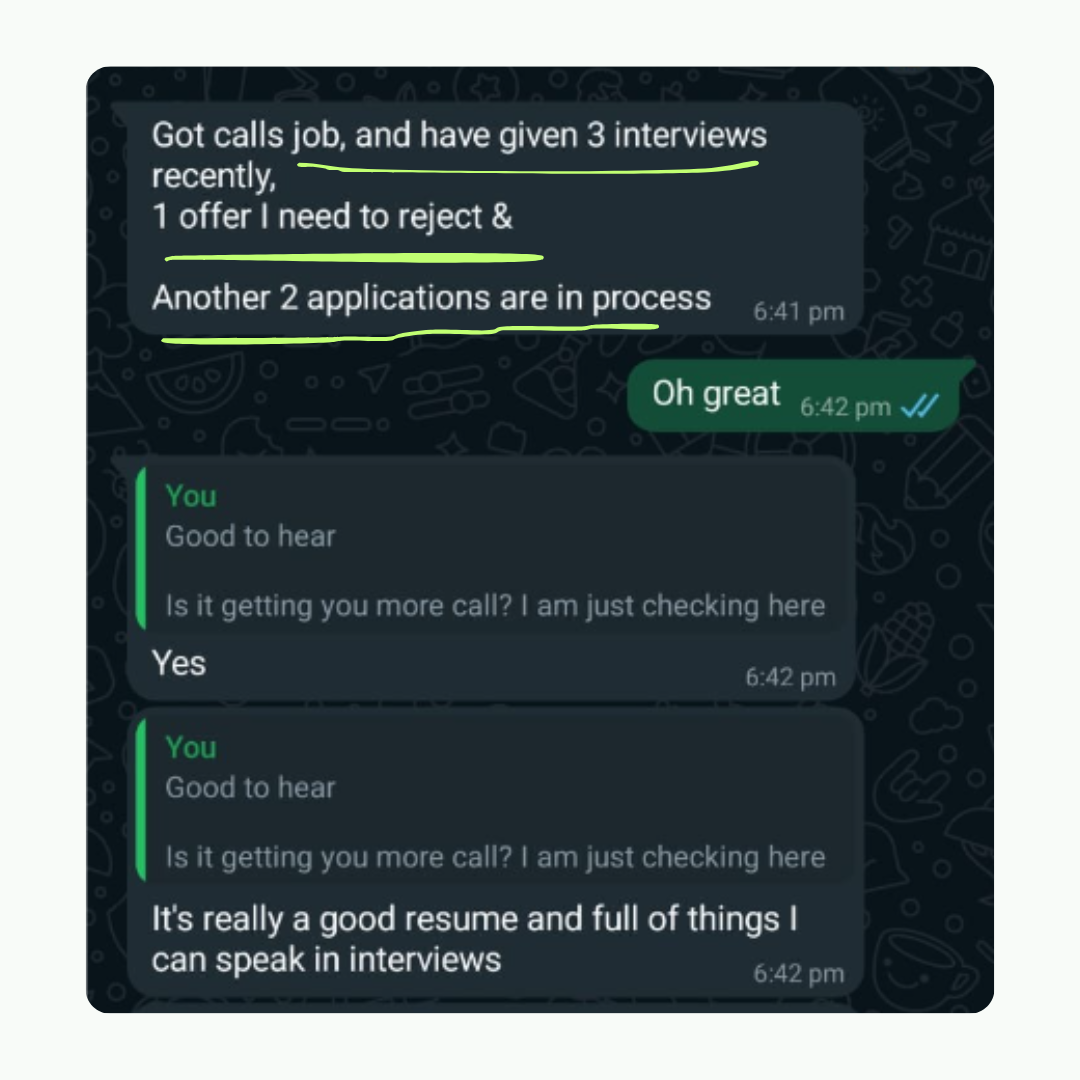
Amit got 2 Offers with our resume builder

My experience was truly outstanding, I got 3-5 interview calls and 2 job offers. The resume wasn't just focused on my current job - it captured my consulting, technical and leadership skills as well. Plus this was much more affordable
Data Engineer - Deloitte